The Layers Under Your Shingles
The layers under your shingles do most of the waterproofing, and they're where cheap roofs cut corners. Shingles shed water; the membrane, underlayment and flashing beneath them stop the water that gets past.
From the deck up, here is what we install and why:
- Roof deck (sheathing). Plywood or OSB nailed to the rafters or trusses. Many 1950s to 1970s Ottawa homes still have 1x6 plank boards with gaps, which we sheath over or replace when they can't hold nails.
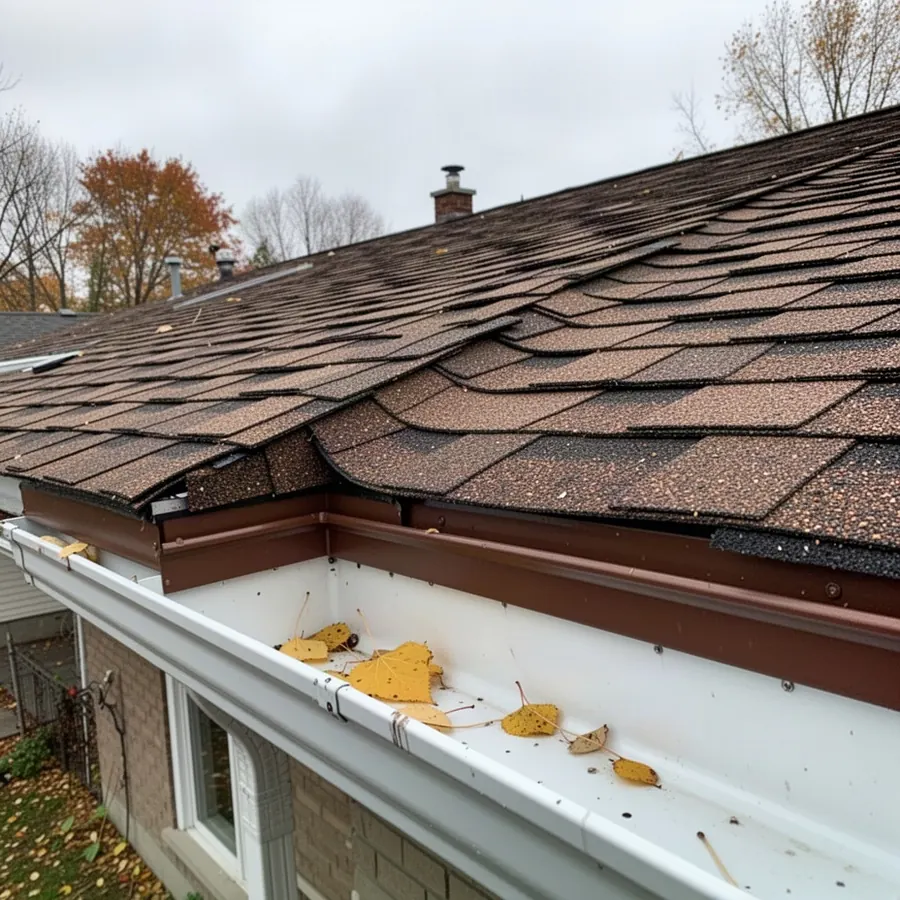
- Drip edge. Metal edging that sends water into the eavestrough instead of behind the fascia. At the eaves it goes under the membrane; at the rakes it goes over the underlayment.
- Eave protection. The Ontario Building Code requires eave protection on shingle roofs in a climate like Ottawa's, from the roof edge at least 900 mm up the slope and to a line at least 300 mm inside the inner face of the exterior wall. We use self-adhering membranes such as Grace Ice & Water Shield or IKO StormShield, and run a second course on low pitches and deep overhangs.
- Valleys and penetrations. The same membrane goes down every valley and around chimneys, skylights and plumbing stacks, where water concentrates.
- Synthetic underlayment. It replaces old #15 felt everywhere else. It doesn't tear or wrinkle when wet, and it keeps the deck dry if a storm rolls in mid-job.
- Flashing. Step flashing at every wall course, counterflashing cut into chimney mortar joints, and kick-out flashing where a roof edge meets a wall.
- Ventilation. The Building Code sets a minimum of 1 unit of vent area per 300 units of insulated ceiling area, split between low intake (soffits) and high exhaust (ridge or roof vents). Balanced airflow keeps the attic cold in winter and dry year-round.
Why it matters: Ottawa ice dams form when heat escaping into the attic melts snow that refreezes at the cold eave. The membrane stops the backed-up water, but ventilation and air sealing stop the dam from forming. Our attic ventilation and insulation work fixes that root cause, and our Ottawa ice dam guide explains the science.