Open 24/7 for emergency roof repair Serving all of Ottawa
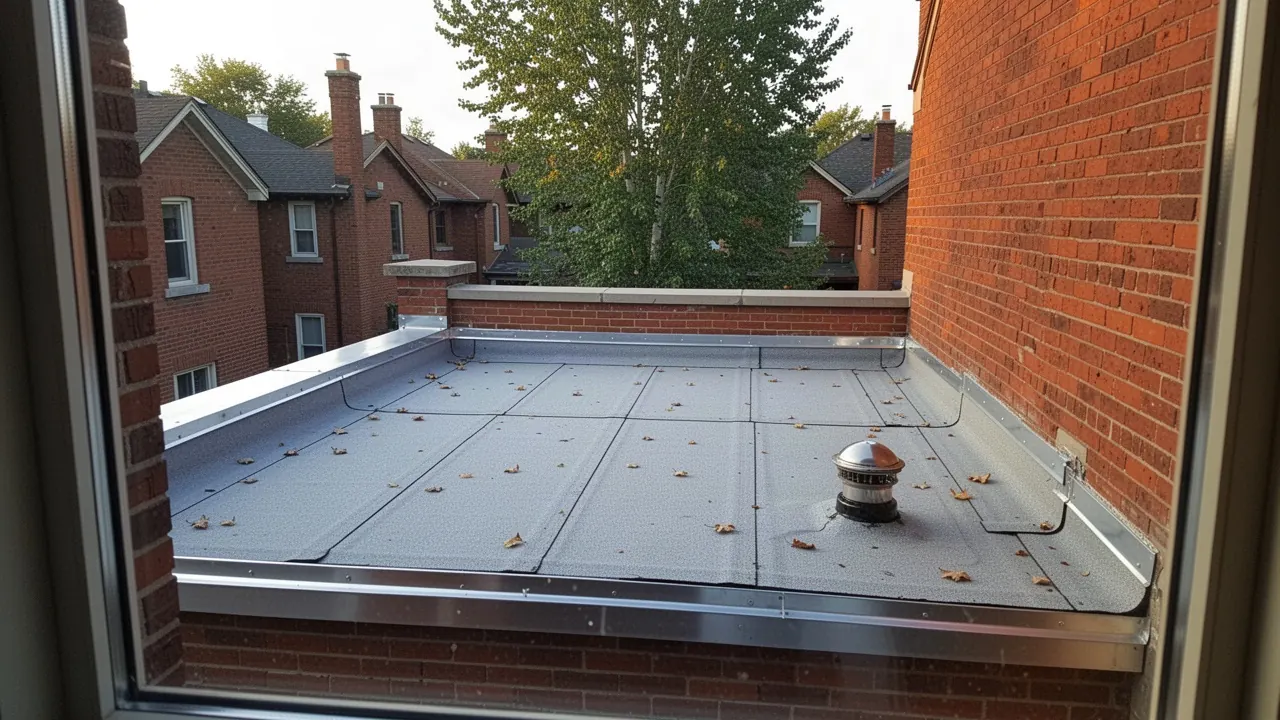
New two-ply SBS flat roof on Glebe rear addition

Residential Flat Roofs

Flat Roofing for Ottawa Homes and Additions

Ottawa Roofing Pros repairs and replaces flat and low-slope roofs on Ottawa houses: rear additions, attached garages, porches, dormers, and the flat-roofed triplexes and infills of Centretown, the Glebe and Westboro.

Flat roofs live or die on drainage and seams, and an Ottawa winter finds every weakness in both. Over more than 17 years and 1,500+ roofing jobs, we have opened up enough failed flat roofs to know that most problems start with water that never leaves.

This page covers why residential flat roofs fail, the membranes we recommend for homes, how tapered insulation fixes ponding, rooftop decks and what a flat roof costs in 2026.

Flat Roof Repair and Replacement for Homes

We repair, replace and newly install flat and low-slope roofs on houses, from a 100 sq ft porch to a full flat-roofed triplex. Most residential flat roof replacements take one to three days.

The typical job is a rear addition, attached garage or sunroom with a low-slope roof tying into a pitched main house. We see them on 1960s and 1970s split-levels in Nepean and Gloucester, and on modern infills with full flat roofs. Flat roofing is one part of our residential roofing services.

A replacement follows these stages:

  1. Assessment: we probe seams, check drains and flashings, and take a small core cut if we suspect wet insulation.
  2. Tear-off: old membrane, gravel and saturated insulation come off down to the deck.
  3. Deck and slope: rotten boards are replaced and tapered insulation or sleepers set the slope to the drain.
  4. Membrane: the new system goes down, wrapping up walls and parapets at least 200 mm.
  5. Flashings and drains: new metal edge, cap flashing, drain or scupper and penetration boots.
  6. Water test and cleanup: we flood-check drains where practical and photograph every detail.

For a leak on a roof that is otherwise sound, our roof repair team can usually patch or re-flash the problem area instead.
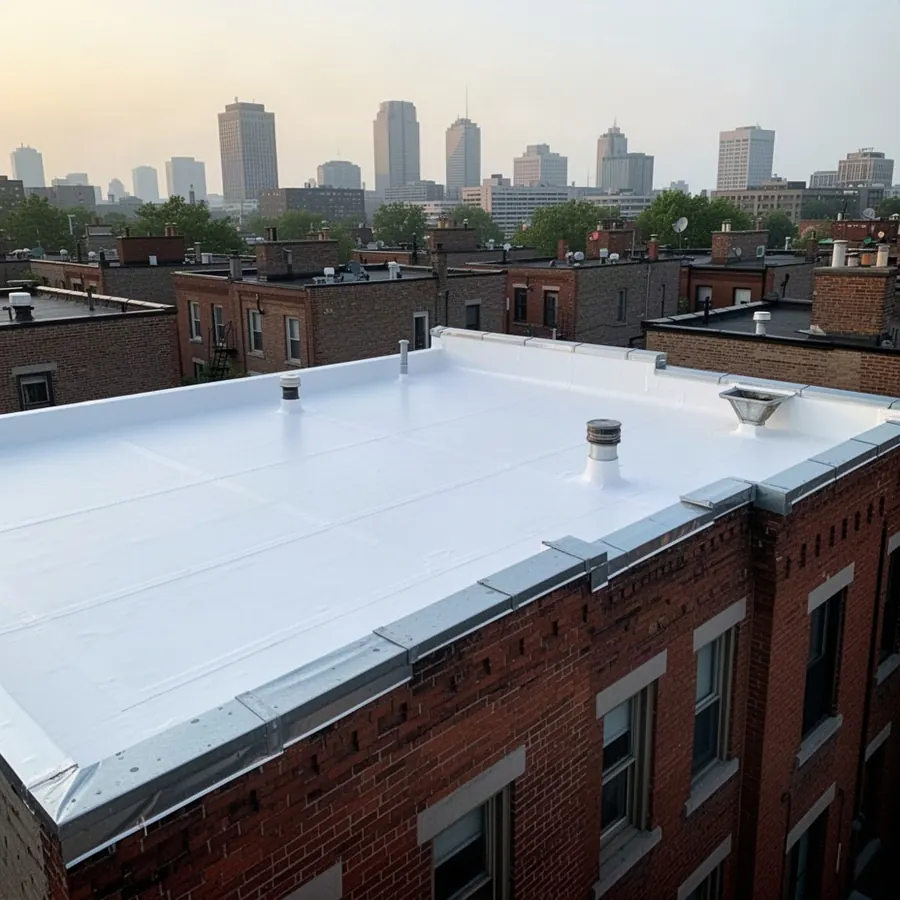
White TPO flat roof over Centretown triplex
New white TPO membrane on a Centretown triplex roof

Why Flat Roofs Fail in Ottawa

Most residential flat roofs fail at seams, flashings and low spots, not in the open field of the membrane. Ottawa's freeze-thaw cycles and heavy snow turn small drainage faults into leaks within a season or two.

These are the failures we find most often, and how we diagnose each one:

Failure What happens How we diagnose it
Ponding Water still sitting 48 hours after rain, freezing and thawing in place and ageing the membrane Tide-line stains, debris rings, a level across the roof
Blocked drains and scuppers Leaves and ice block the outlet, so meltwater backs up over flashings Visual check, water test after clearing
EPDM shrinkage Older rubber pulls away from walls and edges, stretching across inside corners (bridging) Membrane tight at corners, flashings lifting
Seam failure Glued EPDM laps and poorly torched SBS laps open with thermal movement Probing every lap with a seam probe
Flashing failure Membrane not turned up high enough, or counter flashing missing at brick walls Inspection of terminations and wall joints
Blistering Trapped moisture expands under the sheet and splits the surface Soft blisters underfoot, core cut
Wet insulation Water travels under the membrane and soaks the insulation, so the leak shows up metres from its source Core cuts, moisture meter, infrared on larger roofs

Snow load is the other Ottawa factor. A flat roof holds every centimetre of snow that falls, and drifts pile against the taller main house wall, so we check the deck and framing whenever we open a roof. Our roof inspection service is the right first step if you suspect hidden moisture.

Flat Roof Membrane Options for Homes

For most Ottawa homes we recommend two-ply SBS modified bitumen, with EPDM and TPO as good alternatives in specific situations. All three fall within the typical $12 to $20 per sq ft residential replacement range.

System Typical lifespan in Ottawa Relative cost Best for
Two-ply SBS modified bitumen 20 to 30 years Mid to upper range Additions, garages, roofs with foot traffic, complex flashings
EPDM rubber 20 to 30 years Lower to mid range Simple small roofs, dormers, porches
TPO 20 to 25 years Mid range Larger simple roofs, heat reduction under a sunny roof

For a deeper look at the chemistry and commercial use of each membrane, see our TPO vs EPDM vs modified bitumen guide.

Two-Ply SBS Modified Bitumen

Two-ply SBS is a base sheet plus a granulated cap sheet of asphalt modified with rubbery SBS polymer, from makers such as Soprema and IKO. It is the most common residential flat roof in Ottawa because it is tough, stays flexible in deep cold and is easy to repair.

The plies can be torch-applied or self-adhered. We use self-adhered base sheets near wood walls, decks and parapets, where an open flame is a fire risk.

EPDM Rubber

EPDM is a synthetic rubber sheet, such as Carlisle Sure-Seal or Holcim RubberGard, often installed in one piece on small roofs. With no seams in the field, a small porch or dormer roof can be very reliable.

Its weak points are lap seams and shrinkage on older sheets. We use factory seam tape rather than liquid adhesive, and fully adhere the sheet to limit movement.

TPO

TPO is a white thermoplastic sheet, such as Holcim UltraPly TPO or Carlisle Sure-Weld, with seams welded by hot air into one continuous membrane. The reflective surface keeps the roof and the room below cooler in summer.

It suits larger, simple roofs with few penetrations. Older TPO can be harder to weld a repair onto, so details must be right the first time.

Fixing Drainage With Tapered Insulation

Ponding is fixed by building slope into the roof, not by adding more membrane on top. We install tapered polyisocyanurate (polyiso) insulation boards, cut to create a fall of about 1/4 inch per foot toward a drain or scupper.

Where a roof meets a taller wall or chimney, we add crickets, small sloped saddles that split water around the obstruction. Interior drains get new bodies and strainers, and edge-drained roofs get properly sized scuppers with collector boxes to the eavestrough.

Tapered insulation also raises the R-value of the roof, which matters on older additions with little insulation in the joist space. Low-slope roofs framed with joists are hard to ventilate, and the Building Code asks for twice the vent area of a typical attic, 1/150 of the ceiling area. Moving insulation above the deck keeps the deck warmer and drier, and a permit may be needed if the assembly changes, as our permits guide explains.

Turning a Flat Roof Into a Deck

Yes, many residential flat roofs can become usable decks, but the waterproofing and the structure have to be designed together. A rooftop deck needs a building permit in Ottawa, because the roof must carry the added people and furniture and the guards must meet the Building Code.

There are two proven approaches:

  • Walkable vinyl membrane: a heavy vinyl sheet such as Duradek is glued to a sloped plywood deck and serves as both waterproofing and finished floor. It suits balconies and smaller decks over living space.
  • Membrane plus floating surface: an SBS or other membrane goes down first, protected by a board, then pavers on adjustable pedestals or wood sleepers sit on top. Nothing is fastened through the waterproofing.

The worst rooftop decks we open up are framing screwed straight through the old membrane. Every screw is a future leak, and the deck has to come off to find it.

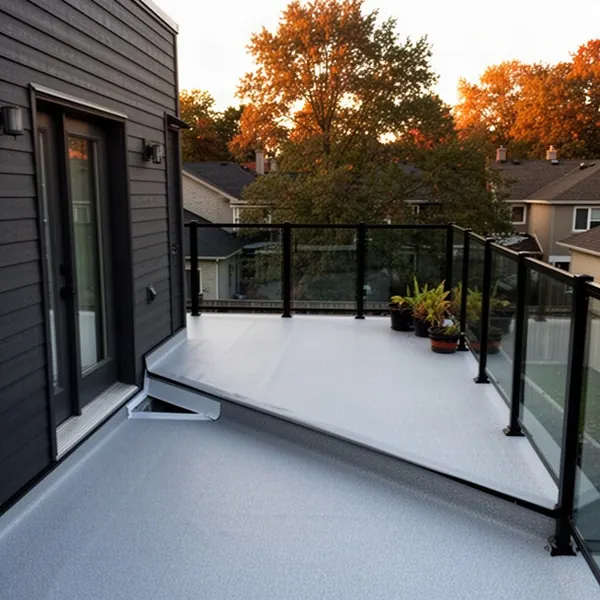
Walkable vinyl roof deck on Westboro infill
Finished walkable vinyl membrane deck on a Westboro infill home

Flat Roof Pricing for Homes

Residential flat roof replacement in Ottawa typically costs $12 to $20 per sq ft in 2026, for modified bitumen or EPDM. Small roofs cost more per square foot, because setup, disposal and flashing work don't shrink with the roof.

Roof Typical size Typical 2026 price range
Porch or bay window roof 60 to 150 sq ft Priced as a small job; often near the top of the per-foot range
Single garage or small addition 250 to 400 sq ft $3,000 to $8,000
Larger rear addition 400 to 700 sq ft $4,800 to $14,000
Full flat-roofed house or triplex 1,000 to 1,500 sq ft $12,000 to $30,000

What moves the price:

  • Tear-off layers: old tar-and-gravel roofs with multiple layers take far longer to strip.
  • Wet insulation and deck rot: found on most roofs that have leaked for more than a season.
  • Tapered insulation and drains: correcting slope adds material but ends ponding.
  • Access: downtown roofs with no laneway can need hoisting or long carries.
  • Penetrations: skylights, vents and chimneys add flashing work, and our skylight replacement service is often done at the same time.

Minor flat roof repairs usually cost $350 to $1,200, and larger repairs $1,200 to $3,500 or more. Your actual price comes from a written quote after a free assessment.

Flat Roof FAQs

Flat and low-slope roofs on Ottawa homes raise questions that pitched roofs don't. These answers cover the ones we hear most on residential flat roof jobs.

How long does a flat roof last?

A well-drained two-ply SBS or EPDM roof typically lasts 20 to 30 years in Ottawa, and TPO 20 to 25. A roof that ponds can fail in half that time.

Clearing drains each fall and spring adds more life than anything else. Older tar-and-gravel roofs on Ottawa homes are usually well past due.

Can a flat roof be replaced in winter?

Yes, with the right system. Torch-applied SBS can be installed in cold weather on a dry deck, so urgent winter replacements are possible.

Self-adhered membranes and EPDM adhesives have minimum application temperatures, so those jobs wait for milder days. We never install over snow, ice or a wet deck, and we tarp or temporarily seal a failing roof until conditions allow.

Should I repair or replace my flat roof?

Repair if the leak is at one seam, drain or flashing and the rest of the membrane is sound and dry underneath. Replace if the insulation is wet in several places, the roof ponds, or the membrane is past 20 years.

A core cut or two settles the question. Patching a roof with wet insulation only moves the leak.

How do I look after a flat roof between inspections?

Keep the drains and scuppers clear, and keep foot traffic and sharp objects off membranes not built for walking. A surprising share of flat roof leaks start with a blocked outlet.

Check the roof from a window after heavy rain: water should be gone within 48 hours. Before winter, clear leaves from the drain, and after a big storm, look for debris or lifted edge metal.

Never chip ice off a flat roof with a shovel or pick, since one gouge through the membrane can soak the insulation all winter. If snow depth worries you, call a roofer rather than going up yourself.

Is torch-on roofing safe on a house?

It is when the crew follows torch-safe practice: no open flame against wood, a fire watch after the torch goes out, and extinguishers on the roof. We use self-adhered base plies at walls, decks and parapets to avoid open flame near combustibles.

Do you handle larger flat roofs on commercial buildings?

Yes. Low-rise commercial and multi-unit roofs are covered by our commercial flat roof replacement service, with system options on our TPO, EPDM and PVC single-ply roofing page. We also handle residential flat roofs in Orléans, Kanata and every other part of the city.

Flat Roofing Across Ottawa

Our crews dispatch from Centretown to every Ottawa community and anywhere within about 30 minutes of the city.

Free roofing estimate

Get Your Flat Roof Assessed

Call or send the form to book a free flat roof assessment, where we check drainage, seams, flashings and the deck underneath. You get a written quote that names the membrane system, insulation and drain work.

Call (343) 504-9753
Call (343) 504-9753 Free Quote