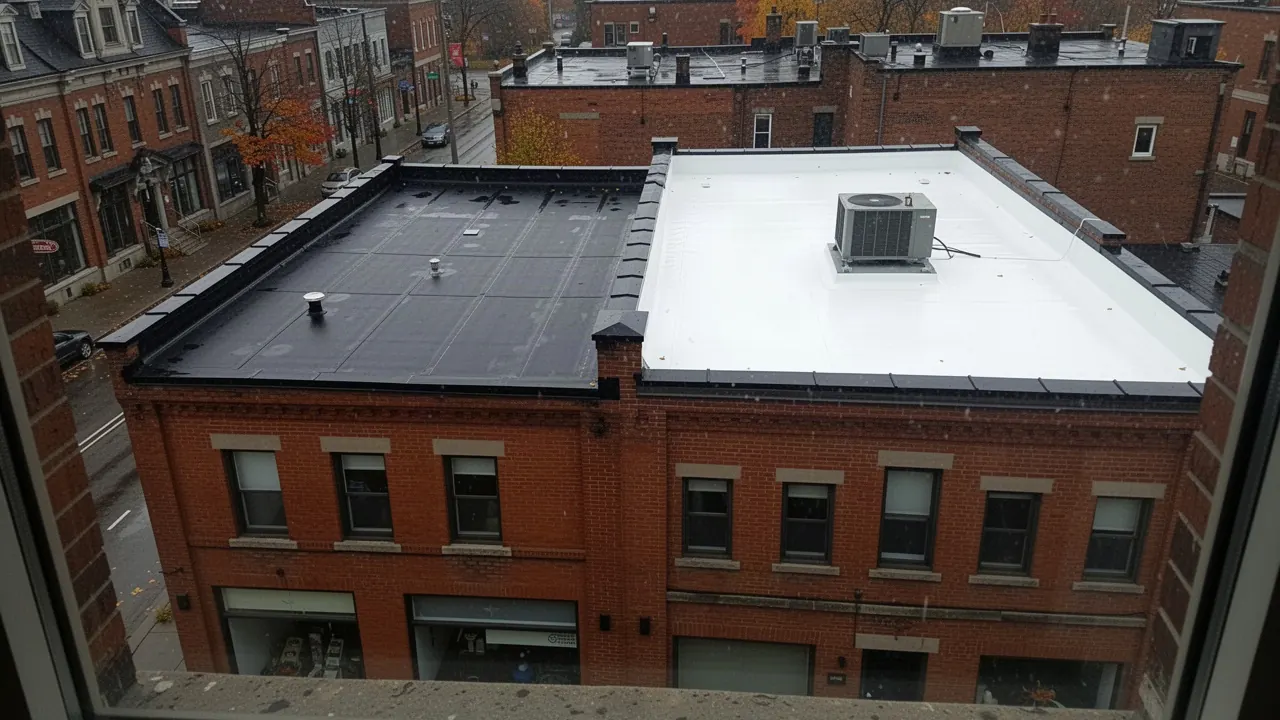
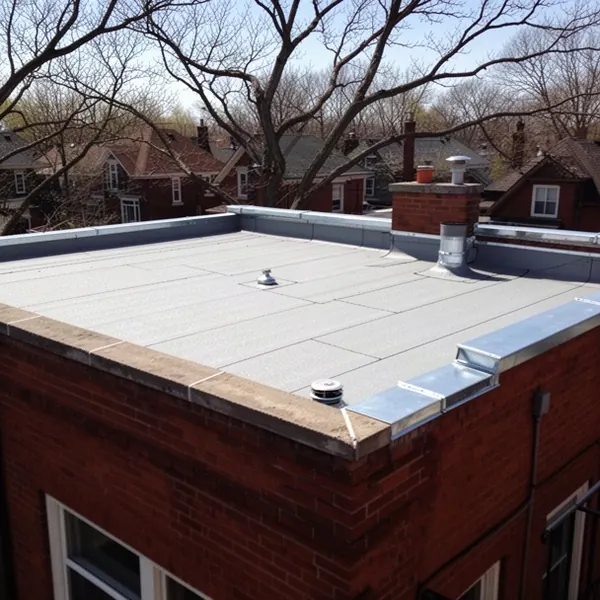
SBS Modified Bitumen in a Cold Climate
Two-ply SBS modified bitumen is one of the most common flat roof systems on Ottawa homes, additions and older low-rise buildings, and it suits the climate well. SBS (styrene-butadiene-styrene) is a rubber polymer blended into the asphalt, which keeps the membrane flexible in cold that would crack an old tar-and-gravel roof.
The system is built in two layers: a base sheet, then a granulated cap sheet with staggered laps. If a shovel or a dropped tool cuts the cap, the base sheet is still there, and that redundancy is why SBS handles foot traffic, roof decks and complex flashings so well. Common products include Soprema Sopralene, IKO Torchflex and GAF Ruberoid.
SBS can be torch-applied, self-adhered or set in cold adhesive. Torching is fast but is hot work, and the Canadian Roofing Contractors Association recommends flameless methods at perimeters, penetrations and wood substrates, where most rooftop fires start. Some self-adhered and cold-applied SBS products can be installed in temperatures as low as about -10°C, which helps for late-season jobs.
Torch-applied SBS can usually be installed later into the fall than adhered single-ply, provided the deck is dry and free of frost. Rolls are stored warm so they unroll without cracking, and crews stop when snow or freezing rain wets the roof surface.
Watch for granule loss, blistering from trapped moisture and cracked flashings at parapets as an SBS roof ages. Most of these can be patched with compatible SBS materials, which is one reason the system is easy to live with.