Open 24/7 for emergency roof repair Serving all of Ottawa
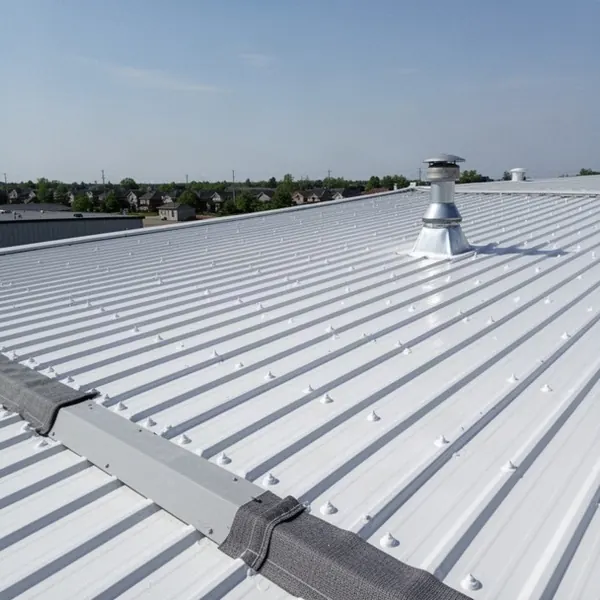
White silicone roof coating on Gloucester retail plaza

Roof Restoration

Commercial Roof Coatings and Restoration in Ottawa

Ottawa Roofing Pros restores aging commercial roofs with silicone, acrylic and urethane coating systems, adding years of service without a full tear-off. We coat SBS, built-up, single-ply and metal roofs on Ottawa plazas, warehouses, offices and condo buildings.

We only recommend a coating when a moisture survey shows the roof underneath is worth saving. Our crews bring more than 17 years and over 1,500 roofing jobs to that call, and we will tell you plainly when replacement is the better spend.

We are licensed, insured and WSIB-covered, and we answer leak calls 24/7.

Roof Restoration Coatings: What the Service Includes

Roof restoration applies a seamless, fluid-applied coating over an existing commercial roof after repairs, renewing its waterproofing and adding roughly 10 to 20 years of service depending on thickness. It costs a fraction of a tear-off and keeps the old roof out of the landfill.

Coatings work over most low-slope and metal roofs: two-ply SBS, gravel-free built-up roofs, EPDM, TPO, PVC, and ribbed or standing seam steel. A complete restoration from us includes:

  • A moisture survey and core cuts to confirm the roof qualifies
  • Cut-out and replacement of any wet insulation and damaged membrane
  • Seam, flashing and penetration reinforcement with fabric and mastic
  • Cleaning, drying and a primer matched to the existing surface
  • A base coat and top coat applied to a measured thickness
  • A final inspection and manufacturer warranty registration where offered

Restoration makes the most sense for owners who need to stretch a capital budget, plan to sell or redevelop within 10 to 15 years, or manage a condo reserve fund that can't absorb a full replacement yet. Coatings are one of the options within our commercial roofing services.

We coat plaza roofs through our Gloucester roofing team, office and retail buildings handled by our Nepean roofers, and light industrial roofs covered by our roofing work in Barrhaven.

Does Your Roof Qualify for a Coating?

Your roof qualifies if the insulation is mostly dry, the membrane is still attached and intact enough to repair, the drains work and a test patch bonds properly. As a rule of thumb, once wet insulation spreads past about 20 to 25% of the roof area, replacement usually makes more financial sense.

We confirm that with a moisture survey. An infrared scan, done in the evening as the roof gives off stored heat, shows wet insulation as warmer areas, and core cuts with a moisture meter confirm what the camera sees. Coating over wet insulation traps the water, so those areas are cut out and replaced first.

Then we test adhesion. Small test patches of the chosen coating and primer cure on the existing surface and are pulled to confirm bond strength before we commit to the system.

A roof usually doesn't qualify when:

  • Wet insulation is widespread, or the deck is rusted or rotted
  • The membrane has lost attachment and billows or ridges across large areas
  • Old EPDM has shrunk badly and is pulling away from parapets
  • Ponding is severe and can't be corrected, and only a water-based acrylic fits the budget
  • The roof has already been coated and the old coating is peeling

If yours doesn't qualify, our commercial flat roof replacement page covers the next step.

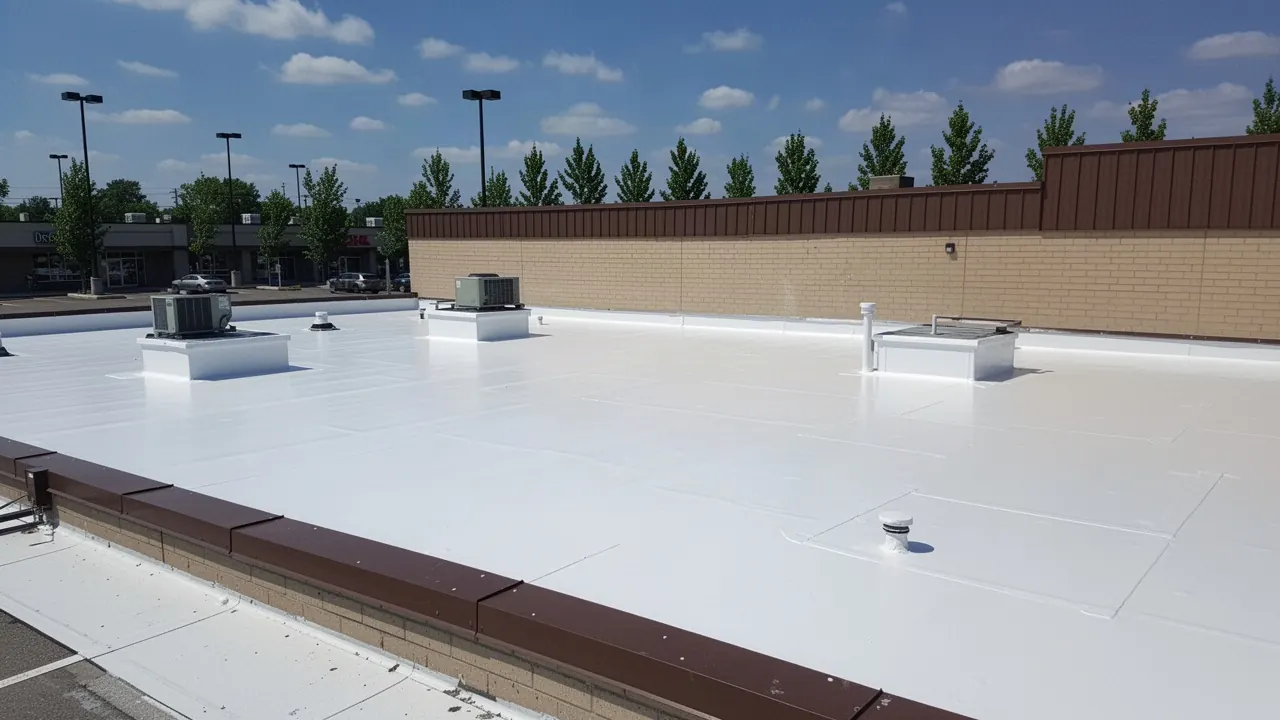
Freshly coated SBS roof on Nepean office building
Restoration coating over a granulated SBS roof in Nepean

Coating Types

Commercial restoration coatings fall into three main chemistries: silicone, acrylic and urethane. Each handles ponding water, cold, dirt and foot traffic differently, and the right one depends on your roof's drainage and surface.

Property Silicone Acrylic Urethane
Ponding water Tolerates it Poor: water-based coating softens Good
Typical minimum application temperature Around 2°C to 4°C and rising Around 10°C and rising, no frost before cure Varies by product
Dirt pickup Higher, reflectivity drops faster Lower Low
Foot traffic and impact Moderate Moderate High
Recoating later Only silicone bonds to silicone Easy to recoat Recoatable with matching products
Relative cost Higher Lower Highest

Temperatures above are typical; each product's data sheet sets the actual limits.

Silicone Coatings

Silicone handles ponding water and ultraviolet exposure better than the other chemistries, and many products go on at lower temperatures than acrylic. That makes it our usual choice for flat Ottawa roofs where water lingers near drains after a thaw.

Silicone picks up dirt, so a white silicone roof gets greyer and less reflective over time. Only silicone sticks to silicone, which locks in the chemistry for future recoats. Systems from manufacturers such as Gaco, GAF and Henry are common examples.

Acrylic Coatings

Acrylic coatings are water-based, reflective and economical, and they recoat easily years later. They suit sloped roofs, metal roofs and low-slope roofs with positive drainage.

Their limits are water and cold. Acrylic must not pond, and it can be permanently damaged if it freezes before it cures, so in Ottawa our acrylic season realistically runs late spring to early fall.

Coatings Over Metal Roofs

Coatings are one of the most cost-effective fixes for a leaking ribbed steel roof. They seal hundreds of exposed fasteners and laps at once and slow surface rust.

The work starts with rust treatment and a rust-inhibiting primer, then sealant domes over every fastener and fabric-reinforced laps before full coverage. When panels are perforated or the roof needs insulation, a retrofit from our commercial metal roofing page is the better path.

Why Some Roof Coatings Fail

Most coating failures trace back to the roof underneath or the preparation, not the product in the pail. These are the mistakes we find when owners call us to roofs coated by someone else:

  • Coating over wet insulation: trapped moisture pushes up blisters and keeps rotting the deck under a roof that looks new.
  • No primer or adhesion test: the coating peels off in sheets, most often over aged EPDM, TPO and chalky painted metal.
  • Applied too thin: nobody measured coverage, so the warranty thickness was never reached and the coating wears through early.
  • Acrylic in ponding areas: standing water near drains and low spots softens it until it lets go.
  • Wrong season: acrylic caught by rain or an overnight frost before it cures washes off or cracks.
  • Unreinforced seams and flashings: movement at laps and curbs splits a coating that had no fabric behind it.

Each of these is preventable. That is why a moisture survey, adhesion test and wet-mil gauge checks are written into every restoration scope we price.

Restoration Process

A roof restoration runs in six steps, from survey to warranty paperwork. A 10,000 sq ft roof typically takes 1 to 2 weeks, including dry time between coats.

Coatings need dry surfaces and a dry forecast for each coat, so we schedule around Ottawa weather rather than through it.

  1. Moisture Survey

    We run the infrared scan and core cuts, map wet areas and photograph every detail. You get a written recommendation: coat, repair and coat, or replace.

  2. Repairs and Wet Area Replacement

    Wet insulation and damaged membrane are cut out and rebuilt. Blisters, splits, open seams and loose flashings are repaired with compatible materials.

  3. Cleaning

    We pressure-wash the roof, remove loose granules and chalking, and clean oily areas with the manufacturer's cleaner. The roof must dry fully before the next step.

  4. Primer and Detail Reinforcement

    A primer matched to the surface goes on where the system calls for it. Seams, flashings and penetrations get fabric embedded in a base layer of coating.

  5. Base and Top Coats

    The coating goes on by roller or spray in one or two coats to the specified thickness. We check wet thickness with a mil gauge as we go, since the warranty term depends on it.

  6. Final Inspection and Warranty

    We walk the roof for coverage, thickness and detailing, then register the manufacturer warranty where one applies. Photos and product data go into your close-out file.

Restoration vs Replacement Costs

A commercial roof coating in Ottawa typically costs $4 to $9 per sq ft in 2026, compared with $10 to $18 per sq ft for a single-ply replacement. Over 10 to 15 years, restoration usually wins when the roof qualifies and you want to defer a capital project.

Here is how the two compare on a 20,000 sq ft roof, using the typical Ottawa ranges:

Factor Coating restoration Single-ply replacement
Upfront cost $80,000 to $180,000 $200,000 to $360,000
Added service life About 10 to 15 years, depending on thickness About 20 to 30 years
Tear-off and disposal Wet areas only Full roof to the deck
Disruption to tenants Low: no tear-off, short crane use Higher: tear-off noise and dust
Insulation upgrade None, beyond wet areas replaced Opportunity to add thickness
End of term Recoat if the surface is still sound Next replacement in 20 to 30 years

Spread over its service life, each option costs a broadly similar amount per year. The real advantage of a coating is timing: it costs about half as much or less today, defers the big spend, and can often be recoated rather than torn off at the end of its term.

Replacement wins when insulation is wet across large areas, when you need more insulation for energy performance, or when you plan to hold the building for 25 years or more. A written quote after a free assessment sets the actual price for either path.

The main cost drivers for a coating are the coating chemistry, the specified thickness and warranty term, the amount of wet area replaced, seam and flashing reinforcement, surface preparation and roof access.

Our 1-year written labour warranty covers the workmanship on every restoration. Coating manufacturers offer separate warranties, commonly 10, 15 or 20 years, tied to the dry thickness applied, an inspection and registration, and they usually require regular upkeep that our commercial roof maintenance programs document.
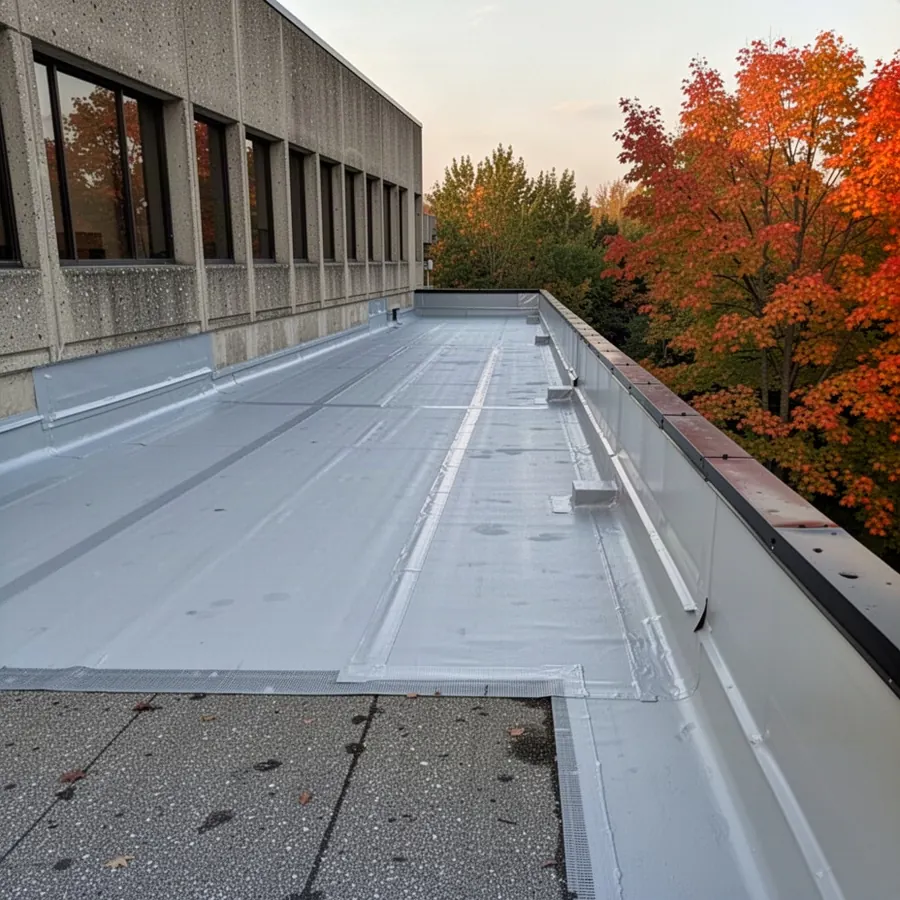
Coated metal roof on Barrhaven light industrial building
White elastomeric coating over a ribbed steel roof in Barrhaven

Roof Coating FAQs

Owners considering a restoration usually want to know how long it lasts, when it can be done and what it won't fix.

How long does a commercial roof coating last?

Most last 10 to 20 years, depending on chemistry and thickness. At the end of the term, a sound coated roof can usually be cleaned and recoated instead of replaced.

Can a roof be coated in Ottawa's climate?

Yes, during the right season. We apply coatings from late spring to early fall, when temperatures stay above each product's minimum and there is time to cure before rain or frost.

Will a coating stop our roof leaks?

A coating stops leaks when the source is the membrane surface, seams or fasteners, and those are repaired first. It won't fix leaks from wet insulation, failed drains or wall and window problems, which is why we find the source before quoting.

For an active leak, start with our commercial roof repair team.

Does a coating affect an existing roof warranty?

It can. Some membrane warranties restrict what can be applied over the roof, so we check your existing warranty terms first; on most roofs old enough to need restoration, the original warranty has already expired.

Coatings & Restoration Across Ottawa

Our crews dispatch from Centretown to every Ottawa community and anywhere within about 30 minutes of the city.

Free roofing estimate

Book a Roof Restoration Survey

Call (343) 504-9753 or send the form with your building address and roof size. We book a free assessment, check whether your roof qualifies, and send a written restoration or replacement recommendation.

Call (343) 504-9753
Call (343) 504-9753 Free Quote