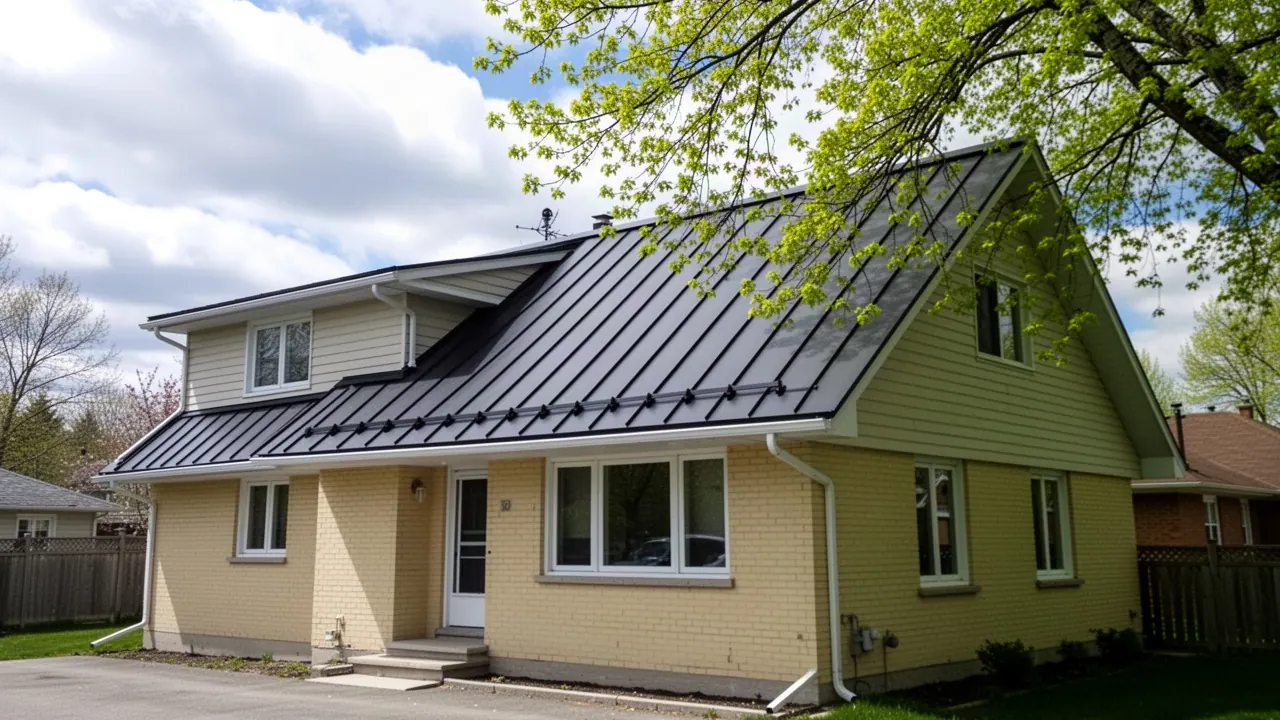
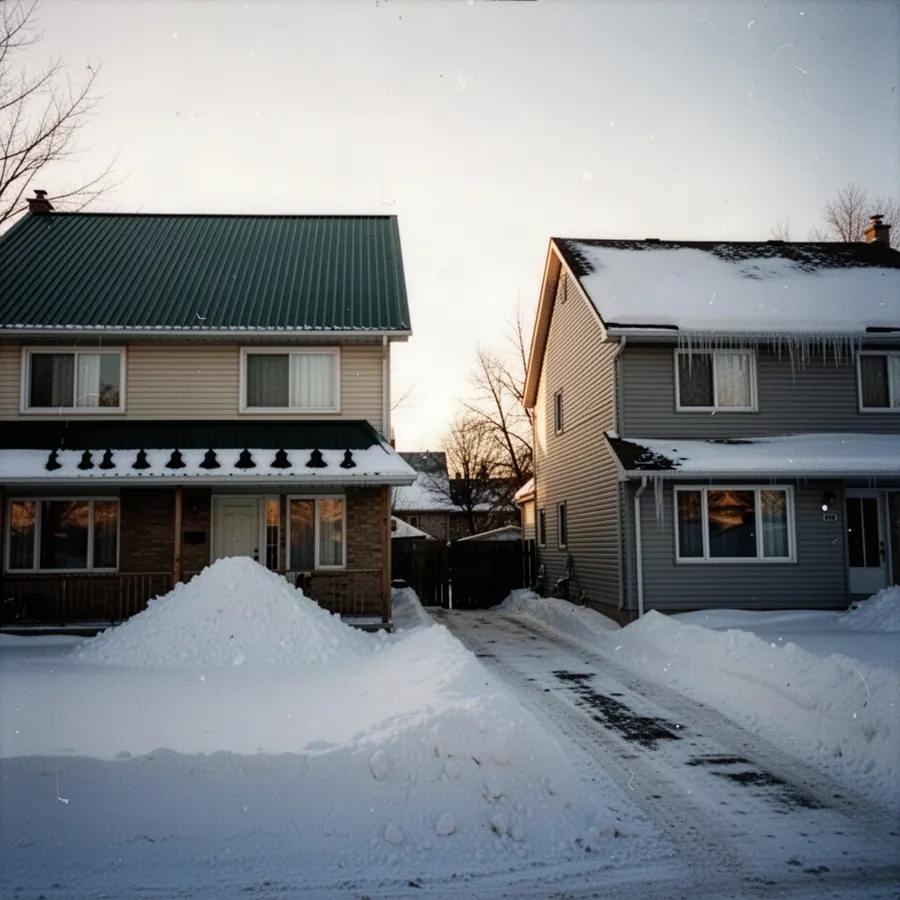
Steel sheds snow far better than shingles, but that sliding snow has to be managed, and neither material prevents ice dams on its own. In wind, both perform well when fastened and detailed properly; failures almost always start at edges, ridges and trims.
A steel roof can drop a winter's worth of snow in one slide after a sunny thaw. We install snow guards above entrances, decks, walkways, gas meters and lower roofs, and we protect plumbing vents, which sliding snow can shear off. Eavestroughs below a steel roof need to sit low enough to let snow pass over them rather than tear them down.
Ice dams form when attic heat melts snow that refreezes at the cold eave, and that happens under steel as well as shingles. We still install self-adhered ice and water membrane at the eaves under every steel roof, as Ontario's Building Code requires for shingles, and our guide to ice dams explains why insulation and air sealing are the real cure.
For wind, most architectural shingles are tested to ASTM D3161 Class F, a 110 mph rating, and some carry higher wind warranties when installed with enhanced nailing. Concealed-fastener standing seam is very resistant to uplift, while exposed-fastener steel relies on screws with rubber washers that should be checked as the roof ages. In severe wind events like Ottawa's May 2022 derecho, roofs of both types typically fail first at poorly secured edges and ridge caps.